Most people can effectively treat, and even reverse bunions without orthotics or surgery. The key is in looking at the root cause of how the bunion developed in the first place. There is no overnight fix, and it most likely requires work and a changeover of the shoe closet, but they can be treated by essentially reversing the way they were formed in the first place.
First off, let’s look at the research. Do people that don’t wear modern shoes get bunions? Not really.
It’s pretty simple. For over 100 years, researchers who have studied populations of people that don’t wear shoes have found next to no hallux valgus (bunions) in these people! Various studies have shown 0% of non-shoe wearing populations have bunions (or hallux valgus), while 2 other studies have shown as much as 1.9% (although it should be noted that the people in this study occasionally wore shoes.)
In one study, researchers observed what happened to people that started wearing modern shoes after not having worn them their entire lives. When they were observed after 6 months, many of these people that had been free of chronic foot conditions their entire lives started developing bunions already!
So, while the Framingham study implies that you get bunions from your parents, the reality is that you only get your soft tissue and bone malleability from your parents…and usually your shoes. Those with more genetic malleability develop bunions quicker, while those without do not. Most people often have one foot and/or leg longer than the other, and that foot generally develops more of a bunion as a result of their shoes fitting tighter on that foot. The way people sit or position their feet can also be a contributor.
In fact, only 3% of people in non-shoe wearing populations have any kind of foot malady (most of which are acute, not chronic). Contrast that with the 73% of Americans who take the time to report foot pain! (2010, American Podiatric Medical Association). In my opinion as someone who has studied foot pathologies most of my life, the design elements of our modern footwear is almost the sole source of chronic foot conditions.
Are bunions causes by over-pronation? It may indeed be a contributor in some cases. Often though, unnatural pronation is caused by a shoe with a tapered toe box (bunion creator) and/or an elevated heel which causes the foot to roll in in the first place. With that said, supposed “over-pronation” has never been significantly linked to injury.
Are bunions caused by tight fitting shoes? Absolutely! They’re also caused by so called “well fitting shoes” that aren’t shaped like feet (i.e. 99% of all shoes). Most people have never even thought about it, but almost all shoes are shaped more like pizza slices or torpedoes than they are healthy human feet!

Classic American Foot Binding
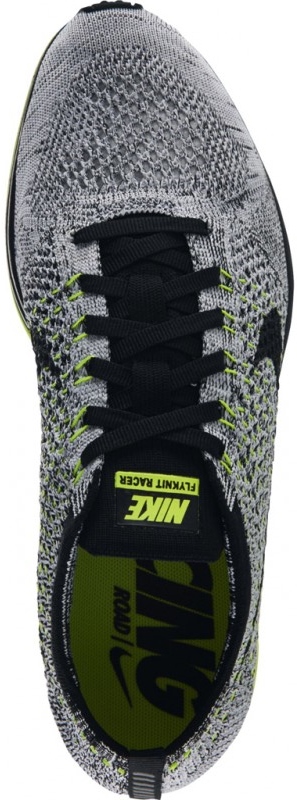
Are bunions caused by high heels? They can be, but they’re also caused by low heels. A heel of any height causes your big toe to move inward, which pushes the bunion out. Time spent with your foot in bunion position is the most critical. For example, wearing a typical pair of Nike’s or Converse all day has a bigger effect than wearing a pair of really tight, super high heels for a couple of hours once a week. People that wear narrow high heels all the time obviously often have the most severe bunions. However, often people wearing what they think are well-fitting, “good” shoes have no idea that their Asics, Brooks, New Balance, Hoka’s, etc. all have a tapered toe box (even in wide) that is keeping their big toe in bunion position, slowly robbing them of function and creating a bunion over time.
As such, most bunions have been developing for most of a person’s life. So while natural treatment can provide very quick pain reduction, fully regaining function and possible reversal of the bunion often takes 18 months or more.
Treatment Options:
Surgery (not recommended): Surgery should be an absolute last resort. This is because bunion surgeries are incredibly invasive and painful, and are only 50% effective. Furthermore, 50% of people who have bunion surgery have the bunion come back within a few years. Yikes.
Shoes
Getting shoes that aren’t shaped with a built in bunion is critical! Do your feet and bunions a favor—get a pair of shoes without heel elevation that have straight big toe alignment and are actually shaped like your feet. Altra, Splay, Lems Shoes, Tolos, Topo, VivoBarefoot, and others all make great shoes for this! Do note settle for wide models of traditional shoes as they still have a tapered toe box that bends the big toe in.
Socks
In addition, if you don’t want to get toe socks like Injinji–buy any “nice” socks at least a size bigger than the package recommends. Socks should be within about an inch or so of the length of your foot. Any shorter than this, and they are likely pulling your toes together and contributing to the problem.
 Correct Toes
If your big toe joint is still somewhat flexible (which most are), then consider getting a pair of Correct Toes, the original athletic in-shoe toe spacers to help restore your feet over time. Use them while active, like when walking or driving, for best effect–as the muscles have to pull the bones back in to place. I highly discourage the use of other knock-off toe spacers, especially those with a band that goes around the toes (as this defeats much of the purpose, causes problems when putting socks or shoes on, and hurts blood flow (healing). Most are also not designed to work well in shoes. Get the original, and best athletic toe spacers here along with a free tips and tricks sheet on how to best make use of them.
Exercises & Foot Manipulation
Doing exercises that use your feet while your big toes are being pulled towards each other (away from your other toes) are incredibly effective. Some of these can be done by hand. However, being able to do things like toe raises or walking with an elastic band that pulls the big toes towards each other will raise the effectiveness.
Massage and manipulation of the entire forefoot area are also necessary to help get the joint in a place to hurt less and be able to slowly move back in to place. This article and the videos in it are highly recommended for more detail on bunion exercises, massages, and stretches. For even more detail, see https://correcttoes.com/foot-help/bunions-and-hammertoes/
Orthotics
Custom orthotics have never been shown to be effective at fixing bunions. Most of them are also thicker than stock insoles, so they contribute to a bunion by making the toes fit tighter in the shoe. In fact, while orthotics can reduce some eversion that may contribute in some cases–many bunion experts and health professionals believe they often make bunions worse. They also atrophy and weaken foot muscles over time, leading to more problems. If you are determined to try an insole, keeping the insole 3/4 length (so it doesn’t squeeze the toes) and with a metatarsal pad (to gently encourage toe splay) is recommended. Bridge Soles are a good option here.
In closing, natural bunion treatment provides fairly quick relief in nearly every circumstance. However, those who are most aggressive and consistent with getting their toes back in the natural position and doing their exercises will see the quickest results. We’ve seen incredibly obvious visual changes happen in just one month with people that were very aggressive with their exercises and switched to wearing foot-shaped shoes and Correct Toes all day.
If you happen to be reading this from the Wasatch Front, Runner’s Corner in Orem carries all of these products and many foot-shaped, bunion friendly shoes. The excellent team there will be happy to help you with your bunion.
For more detailed information on the hereditary bunion myth, read this from Dr. Ray McClanahan: https://www.correcttoes.com/foot-help/hereditary-bunion-myth-part-i-dr-ray-mcclanahan-dpm/
References:
http://refs.ahcuah.com/papers/shulman.htm (Shows 0% Hallux Valgus or Bunions in Chinese and Indian Populations that don’t wear shoes)
https://ahcuah.wordpress.com/2013/06/19/zomg-high-heels-dont-cause-bunions-new-study-reveals/
Runner’s World Article with Dr. Ray McClanahan: https://www.runnersworld.com/health-injuries/a25345875/bunion-pain-relief/
A few more citations:
Hoffman, P. 1905. Conclusions drawn from a comparative study of the feet of barefooted and shoe-wearing peoples. The Journal of Bone and Joint Surgery, 3, 105-136.
Lam Sim-Fook and Hodgson, A. R. 1958. A comparison of foot forms among the non-shoe and shoe-wearing Chinese Population. 7. Bone 7t Surg., 40A, 1058.
Shine, I. B. 1965. Incidence of hallux valgus in a partially shoe-wearing community. British Medical Journal, 1, 1648-1650.
Kato, T. and Watanabe, S. 1981. The etiology of hallux valgus in Japan. Clinical Orthopedics and Related Research, 157, 78-81.


