health

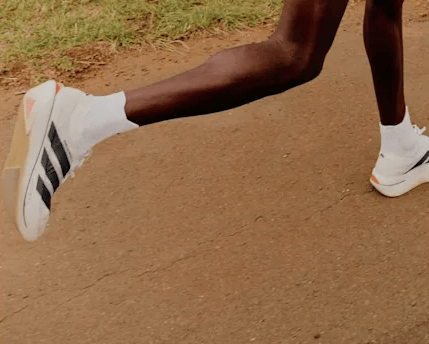
3mm Drop Adidas Adizero Adios Pro Evo 3

The Fastest Running Shoes in the World are 3mm Drop and Zero Drop – Why?

Lost in all the hype of Sebastian Sawe breaking the world record and the 2 hour mark in the Marathon with his incredible 1:59:30 performance was the little detail that his Adizero Adios Pro Evo 3 shoes were only 3mm drop, with a stack height of 39mm in the heel and 36mm in the forefoot. This is a detail that adidas seems to be avoiding publishing widely or talking about, and that the running world at large seems to have missed in general. Somewhat shockingly, Mizuno also just announced they’re releasing their new pinnacle performance super shoe that is also 3mm drop with the same midsole specs as the Adi shoe.

However, it’s not like the shoes only being 3mm drop came out of nowhere—Eliud Kipchoge had great performances—including his own ‘Breaking 2’ marathon event where he ran 1:59:40—in 4mm drop Nike Air Zoom Alphafly NEXT% shoes.

Kipchoge has now been featured promoting Nike’s Apex, their newest top of the line, “most advanced racing system yet” shoe. The “Apex features zero-drop geometry” and is set to release in January 2027. When I created the first Altra’s, I predicted it would be 15-20 years before we’d see Zero Drop in a flagship shoe from a major brand like Nike. Well, here we are.

The world’s first Zero Drop super shoe was the Altra Vanish Carbon, which from a geometry standpoint is also the most stable super shoe made to date. I even ran a marathon with almost no training (& only one long run of just 13 miles) over the weekend in the Vanish Carbon 2 and my body feels amazing a few days later, which has been my experience every time I’ve raced a marathon with a Zero Drop shoe. With that said, my favorite feature of those shoes is the foot-shaped toe box design that has allowed me to race in supreme comfort and go blister free in every marathon and Ultra-marathon for the last 18 years.

Why are the fastest running shoes in the world trending toward Zero Drop? What are the speed benefits of Zero Drop shoes…what specifically makes them faster?

  • More loading/power transfer. Zero Drop allows deeper loading of the posterior chain and foot muscles that allows for a more powerful push-off. see note 1 Think of this like a pogo stick – if it can’t push down as far, it can’t bounce back as powerfully. Your foot, Achilles, and calf muscles are no different. The fastest sprint and jumping shoes in the world have always been negative drop (raised forefoot) or zero drop. In fact, running shoes did not have elevated heels at all prior to cushioning being introduced in the 1960’s by Onitsuka / Blue Ribbon Sports / Nike. Of course, for long distances—for most people—those muscles will have to be trained before they can consistently be faster and more efficient. With that said, it was VERY common when I was at Altra for people to tell us they got their first Altra’s and then ran a big personal record in their 5k, 10k, half marathon, or marathon the next day.
  • Lighter weight or more propulsive cushioning. Zero Drop shoes are lighter weight or get more propulsive forefoot cushioning for their weight. Obviously not having a big chunky heel on a shoe—and all the plastic heel counter material that should be there to stabilize the biomechanical problems/movements caused by the elevated heel—results in the shoe being lighter weight. On the flip side—and this is realistically a big motivation for the current shift—lowering the drop allows for a maximum amount of cushioning in the forefoot without adding as much weight to the shoe. A shoe without an elevated heel is lighter. A shoe without heavy heel counter materials to stabilize the motion that happens more when you have an elevated heel is also lighter.
  • More biomechanically efficient / better running technique. Zero Drop improves biomechanical efficiency. By eliminating the elevated heel wedge, the runner’s center of mass remains more balanced over the midfoot, reducing the tendency to overstride or brake with each step. Our early research at my running store (pre-Altra) showed that the average person was landing less dorsiflexed and 2-3″ more underneath their knee in a zero drop model than they were in the most popular running shoe models on the market. It’s not hard to understand that when a shoe is heavier in the back half of the shoe that it will cause the heel to drop and the toes to be more up at landing (making the foot dorsiflex). It’s also not hard to understand that when the back half of the shoe is thicker than the front, that the back will catch the ground earlier than it would if the shoe were level from heel to forefoot.
  • It’s the body’s natural, default position. Zero Drop is the way humans were born and get out of bed every morning. It’s the most natural platform possible in a shoe and is the default position your foot and leg were designed to operate in. It’s the most naturally efficient. And yes, I’ll give you that people who have run in elevated heels for decades will have to adjust back to their body’s natural default position for a while before it becomes consistently more efficient for them. This is part of the reason I developed P.R. Gear Bridge Soles.
  • Less energy is wasted stabilizing, because Zero Drop is a more stable platform (think about wobbling your ankle back and forth flat on the ground vs elevated in the air at all, or simply how stable you are barefoot vs how obviously unstable you are in a pair of high heeled shoes). More energy gets to be used for forward drive and propulsion in a Zero Drop shoe.
  • Your feet and lower legs become stronger. Consistent use of zero-drop shoes engages intrinsic foot and calf muscles through a fuller range of motion, building greater functional strength and power for propulsion. Secondarily speaking, studies equate foot strengthening with statistically being BY FAR the best way to reduce running injuries with a 2.42x reduced injury risk (Taddei, et al 2022). When you’re injured less, you can train more.
  • Improved Cadence / Optimized Ground Contact Time. Zero Drop shoes typically improve cadence and optimize ground contact time. Obviously with a flatter platform and without the chunky elevated heel on the shoe, this is going to encourage a more natural, higher-frequency turnover with a cleaner landing, minimizing wasted energy and optimizing ground contact duration.
  • Less injury = more training = faster times. Because higher drop and more cushioned shoes have repeatedly been shown for 40 years to put more strain on joints, theoretically, rotating in Zero Drop shoes should help reduce long term wear and tear on joints, resulting in healthier, less injured runners see note 3. While traditional high drop shoes shift load off the calf and Achilles at the expense of shin/knee/joint stress, modern cushioned zero-drop shoes aim to balance that equation by offering cushioned protection while keeping the body’s natural alignment and biomechanics intact. It should also be pointed out that the muscles of the foot and lower leg are adaptable tissues which can respond positively and get stronger with increased load over time. The same can not be said for joints, which are not adaptable and get worn down with increased load over time. So you choose…more load on the adaptable tissues or on the non-adaptable joints???
    Not being injured leads to more training, which leads to more speed. Personally, I had an injury riddled college running career like most elite collegiate runners. However, since getting my first pair of Altra prototypes 18 years ago in 2008, I haven’t had a single serious running injury that has kept me away from training (including a year I ran a 2:30 marathon on 25 miles per week of training!). Note: I have been kept out of training many times from getting sick, taking hard falls on the trail, etc.!
  • Counter intuitive note: All shoes with a relatively uniform platform compress more in the forefoot and develop some drop (albeit minimal) over time, because peak impact actually occurs in stance phase (mid-stance to push off). See note 2.
  • …and we haven’t even begun to touch on the speed benefits of a foot-shaped toe box and getting the big toe straight! I firmly believe we will see sprint and jump shoes in the future intentionally hold the big toe in a straight position because the power transfer and blood flow are so much better (this has already confirmed in research (Ridge, et al, 2019).

I hope you enjoyed this read and look forward to the comments. If you like this post, please share it!

Notes for more detail:
Note 1: A zero-drop platform stretches the Achilles tendon and calf muscles to their natural, full physiological length upon foot-strike, maximizing the stretch-shortening cycle to store and release elastic recoil energy more efficiently during toe-off.

Note 2: When I was Altra, we tested returned shoes for years and years and never once saw a pair that came back negative drop, even among shoes that were clearly worn by heel strikers. Most pairs developed between 0.5mm and 1mm of drop after being worn for 300-1000 miles. There’s a reason for this:
1. The Cumulative Load of the Active Peak
While a heel striker hits the rearfoot first with a sharp impact transient, the actual duration and magnitude of total mechanical work happen during mid-to-late stance as the body rolls forward. Every runner—whether heel, midfoot, or forefoot striker—spends the latter half of stance driving their entire body weight (magnified by running forces) directly down through the forefoot to propel themselves forward. Over hundreds of miles, that sustained, high-pressure dwell time in the forefoot compresses the uniform foam much more than the quick, localized impact at the heel.
2. Elimination of Heel-Biased Softness
In traditional shoes, manufacturers intentionally put softer, thicker foam in the heel to mask the impact. Because a zero-drop shoe uses the same thickness and density throughout, the heel lacks that extra “cushion buffer” to absorb the initial hit, meaning the foam takes a uniform beating, but the forefoot ultimately bears the brunt of the prolonged propulsive loading phase.
3. The Math of Compression Set
Foam doesn’t just crush instantly; it suffers from compression set (gradual loss of rebound and permanent height reduction) based on cumulative mechanical stress over time. Since the forefoot experiences the highest combined forces during the push-off phase for every single step taken, it packs down faster when starting from an even baseline.

Note 3: Some will say there will be more injuries due to increased Foot / Achilles / Calf strain. And that will be true for a select few. Scientifically and statistically speaking, that will be the most likely with very high mileage runners, as it is already, and studies have shown that Achilles injuries are quite rare in all but that group. With that said, the balance will almost certainly result in far fewer running injuries in general, as Achilles and soleus injuries make up only a very small percentage of running injuries—and the areas that make up the most injuries are likely to go down.

The Best Running Shoes for Newer or Inexperienced Runners

The Best Running Shoes for Newer & Beginning Runners

By Golden Harper

“It is critical for newer runners to choose a shoe that: A) doesn’t encourage poor technique, and B) gives the toes *a ton* of space so the foot can effectively absorb, control, and stabilize the forces of impact. Unfortunately, very few shoes meet this criteria.”

Running shoes for newer runners should not weaken the feet or make it hard to learn efficient, low impact running technique. Unfortunately, most popular running shoes contain elevated heels and tapered toe boxes that both weaken the feet and disrupt the body’s ability to move naturally with low impact.

The best shoe for any runners should encourage efficient, low impact running technique—and allow the feet to get stronger by encouraging the toes to spread out and absorb impact and stabilize the body.

I grew up working and managing my family’s running specialty store, which I now co-own. I studied biomechanics and running shoes at two universities, and work as a shoe design consultant and running coach.  So you can imagine I often get asked by people getting in to, or getting back in to running, “what shoes should I wear?” To which I reply, “That’s complicated, personal, and everyone is different.” With that said, there are a lot of important considerations and learnings that can come from that question, and I hope to address a few of them here.

First off, there’s not a ton of research to lean on when it comes to this. However, the best we have essentially equates to get the shoes that feel the most comfortable, relaxed, and free. “Barefoot with cushion” or “the shoe that makes you most feel like you’re running barefoot on the grass” is how many experts describe it. The research basically says “run in the shoe that lets your body move naturally or doesn’t change the way your body wants to move.” Famous studies by Benno Nigg, and the largest running shoe study ever (Ferber, Calgary) essentially tell us that the best shoes simply get out of the way, and generally don’t “support”, “control”, etc. The Green Runner Study in Calgary tells us that most injured runners—around 85%— do best in a shoe “that doesn’t change what the body wants to do at all.” Interestingly, of the 13% or so that do better in a stability shoe, many of those don’t necessarily have excessive pronation (foot collapsing inward—add link to how to read shoes article).

While I encourage people to find whatever feels best to them, there are several factors to keep in mind when looking for shoes for a newer runner:

  • While cushioning will protect the feet, too much of it will also weaken the feet in the long term. This is important because statistically speaking, foot strengthening is the #1 way to reduce running injuries.
  • Cushioning does NOT protect joints. Studies have shown repeatedly for 40 years that cushioning only protects where cushioning is, and that more cushioned shoes put MORE pressure on the shins, knees, hips, and low back
  • Most running shoes still have elevated heels that disrupt natural, low impact running technique and essentially teach people to run in a way that is unnatural (& damaging) to their body
  • Most running shoes still have tapered toe boxes, which bend the big toe in towards the other toes. This often causes the arch to not work properly and can lead to collapsing arches and unnatural foot motion. Because feet are naturally widest at the tips of the toes, this crowding of the toes towards each other also contributes to forefoot pain like neuromas and conditions like Plantar Fasciosis as well.

It is very important for newer runners to establish good habits early, so they don’t have to suffer through years of inefficiency or injury and/or go through months or years of un-learning bad habits. This is especially true when it comes to learning efficient, low impact technique—and teaching the toes to splay out to absorb impact, stabilize the foot at mid-stance, and push-off. For these reasons, I feel it is critical for newer runners to choose a shoe that: A) doesn’t encourage poor technique, and B) gives the toes *a ton* of space to spread out. Unfortunately, very few shoes meet this criteria.

There are exceptions of course, but in general, why would you give a newer runner a shoe with an elevated heel that actively teaches them to adopt unnatural, higher impact running technique?

For these reasons I typically recommend a mild to moderately cushioned low drop or zero drop running shoe with a foot-shaped toe box for newer runners. This is usually an Altra or a Topo brand shoe. Our #1 recommendation for most newer runners is the Altra Escalante. For those newer runners with weak arches or feet that collapse inward, we often recommend the Altra Provision, and typically pair up with an inexpensive pair of Bridge Soles and/or a StableToe if they want to feel a bit more arch and stability.

The Truth About Running Store “Gait Analysis”

It pains me to say this as a running store owner, but unfortunately, most running store “gait analysis” is mostly a marketing ploy that runs contrary to sound scientific principles. It should more accurately be called “pronation analysis”, and It helps the store establish some authority over you so they can guide you in to whatever shoes they think will be best for you—or most profitable for them. Unfortunately, the research shows us that assigning shoes by pronation pattern or by arch height or foot type actually causes more injuries.

Additionally, if it were truly gait analysis, why don’t they actually analyze your gait? They could just as easily show you that you’re overstriding (which around 80% of runners do to some degree), and quickly offer some tips on how to correct it—but that doesn’t help them sell shoes in the moment.

With all that said, I’m a huge proponent of running stores and the ability to run in shoes before you buy them. In my opinion, the best process is to actually run in the shoes you will buy, keeping the following things in mind:

  • Only judge a shoe by how it feels while you’re actually running in it. How it feels standing or walking shouldn’t matter much.
  • Try at least 4 different models on, preferably 6 to 8.  Try a few that you or the shoe sales person feel might likely be best. As a newer runner wanting to establish good form habits and foot strength, this likely means trying a few Altra’s and/or Topo’s. But also try at least one shoe out from left field and one from right field. This could mean trying a minimalist shoe and a maximalist shoe. This might mean trying a “stability shoe” if you’re neutral, or some neutral shoes even if the shoe salesman thinks you should be in a stability shoe.
  • Keep in mind that a lot of cushioning is not necessarily a good thing. Most people will do best with an amount of cushioning that is enough to simulate the feeling of running barefoot on grass or dirt. Cushioning has been shown in studies to amplify forces at the joint level, while reducing forces in the foot and ankle area. Yes you read that right, studies have shown for 40 years that as we add cushioning to shoes, it amplifies the amount of force on the shins, knees, hips, and back. As such, I always recommend people buy a shoe with the least amount of cushioning they feel comfortable with.

Fitting Tips

Ask any shoe fitter and they will likely tell you the hardest part about fitting people for shoes is getting them to buy their shoe big enough. I would guess around 90% of the people I fit are wearing their shoes too short, or too narrow. Due to having many unique foot shapes and other factors, most shoes are designed to have about a full thumbnail’s width (around ¾”) between the longest toe and the end of the shoe while standing with the knees bent. This allows the heel pocket, arch, and forefoot flex zones to be in the proper place. Keep in mind that shoes will fit looser first thing in the morning and tighter in the evening. I always tell people that “If they don’t feel too big in the toes…they’re too small!” The benefits of giving your feet room to breathe and your toes room to spread are multitudinous. Generally it takes people anywhere from a couple of minutes to a couple of weeks to get used to this new sensation of not having their shoes strangling their feet.

As for width, studies show that the average women’s shoe is 2 sizes narrower than the average women’s foot. It’s about a size narrower for men. Look to see if your foot hangs over the sides of the shoe, even if it “feels” comfortable. If so, consider going with a wider shoe, a wide size, or remove the insole to create more room (most, but not all shoes work well this way).

Socks

Many experts recommend buying “nice” socks at least a size larger than the package recommends. Most expensive socks tend to fit too tight, restricting bloodflow, crowding toes, and even contribute to foot deformation and related injuries like bunions, forefoot pain, and plantar fasciopathies.