injuries

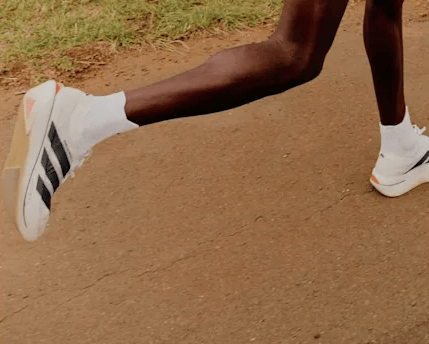
3mm Drop Adidas Adizero Adios Pro Evo 3

The Fastest Running Shoes in the World are 3mm Drop and Zero Drop – Why?

Lost in all the hype of Sebastian Sawe breaking the world record and the 2 hour mark in the Marathon with his incredible 1:59:30 performance was the little detail that his shoes were 3mm drop, with a stack height of 39mm in the heel and 36mm in the forefoot. This is a detail that adidas seems to be avoiding publishing widely or talking about, and that the running world at large seems to have missed in general.

However, it’s not like the shoes only being 3mm drop came out of nowhere—Eliud Kipchoge had great performances—including his own ‘Breaking 2’ event where he ran 1:59:40—in 4mm drop Nike Air Zoom Alphafly NEXT% shoes.

Kipchoge has now been featured promoting Nike’s Apex, their newest top of the line, “most advanced racing system yet” shoe. The “Apex features zero-drop geometry” and is set to release in January 2027.

Why are the fastest running shoes in the world trending toward Zero Drop? What are the speed benefits of Zero Drop shoes…what specifically makes them faster?

  • More loading/power transfer. Zero Drop allows deeper loading of the posterior chain and foot muscles that allows for a more powerful push-off. see note 1 Think of this like a pogo stick – if it can’t push down as far, it can’t bounce back as powerfully. Your foot, Achilles, and calf muscles are no different. The fastest sprint and jumping shoes in the world have always been negative drop (raised forefoot) or zero drop. In fact, running shoes did not have elevated heels at all prior to cushioning being introduced in the 1960’s by Onitsuka / Blue Ribbon Sports / Nike. Of course, for long distances—for most people—those muscles will have to be trained before they can consistently be faster and more efficient. With that said, it was VERY common when I was at Altra for people to tell us they got their first Altra’s and then ran a big personal record in their 5k, 10k, half marathon, or marathon the next day.
  • Lighter weight or more propulsive cushioning. Zero Drop shoes are lighter weight or get more propulsive forefoot cushioning for their weight. Obviously not having a big chunky heel on a shoe—and all the plastic heel counter material that should be there to stabilize the biomechanical problems/movements caused by the elevated heel—results in the shoe being lighter weight. On the flip side—and this is realistically a big motivation for the current shift—lowering the drop allows for a maximum amount of cushioning in the forefoot without adding as much weight to the shoe. A shoe without an elevated heel is lighter. A shoe without heavy heel counter materials to stabilize the motion that happens more when you have an elevated heel is also lighter.
  • More biomechanically efficient / better running technique. Zero Drop improves biomechanical efficiency. By eliminating the elevated heel wedge, the runner’s center of mass remains more balanced over the midfoot, reducing the tendency to overstride or brake with each step. Our early research at my running store (pre-Altra) showed that the average person was landing less dorsiflexed and 2-3″ more underneath their knee in a zero drop model than they were in the most popular running shoe models on the market. It’s not hard to understand that when a shoe is heavier in the back half of the shoe that it will cause the heel to drop and the toes to be more up at landing (making the foot dorsiflex). It’s also not hard to understand that when the back half of the shoe is thicker than the front, that the back will catch the ground earlier than it would if the shoe were level from heel to forefoot.
  • It’s the body’s natural, default position. Zero Drop is the way humans were born and get out of bed every morning. It’s the most natural platform possible in a shoe and is the default position your foot and leg were designed to operate in. It’s the most naturally efficient. And yes, I’ll give you that people who have run in elevated heels for decades will have to adjust back to their body’s natural default position for a while before it becomes consistently more efficient for them. This is part of the reason I developed P.R. Gear Bridge Soles.
  • Less energy is wasted stabilizing, because Zero Drop is a more stable platform (think about wobbling your ankle back and forth flat on the ground vs elevated in the air at all, or simply how stable you are barefoot vs how obviously unstable you are in a pair of high heeled shoes). More energy gets to be used for forward drive and propulsion in a Zero Drop shoe.
  • Your feet and lower legs become stronger. Consistent use of zero-drop shoes engages intrinsic foot and calf muscles through a fuller range of motion, building greater functional strength and power for propulsion. Secondarily speaking, studies equate foot strengthening with statistically being BY FAR the best way to reduce running injuries with a 2.42x reduced injury risk (Taddei, et al 2022). When you’re injured less, you can train more.
  • Improved Cadence / Optimized Ground Contact Time. Zero Drop shoes typically improve cadence and optimize ground contact time. Obviously with a flatter platform and without the chunky elevated heel on the shoe, this is going to encourage a more natural, higher-frequency turnover with a cleaner landing, minimizing wasted energy and optimizing ground contact duration.
  • Less injury = more training = faster times. Because higher drop and more cushioned shoes have repeatedly been shown for 40 years to put more strain on joints, theoretically, rotating in Zero Drop shoes should help reduce long term wear and tear on joints, resulting in healthier, less injured runners see note 3. While traditional high drop shoes shift load off the calf and Achilles at the expense of shin/knee/joint stress, modern cushioned zero-drop shoes aim to balance that equation by offering cushioned protection while keeping the body’s natural alignment and biomechanics intact. It should also be pointed out that the muscles of the foot and lower leg are adaptable tissues which can respond positively and get stronger with increased load over time. The same can not be said for joints, which are not adaptable and get worn down with increased load over time. So you choose…more load on the adaptable tissues or on the non-adaptable joints???
    Not being injured leads to more training, which leads to more speed. Personally, I had an injury riddled college running career like most elite collegiate runners. However, since getting my first pair of Altra prototypes 18 years ago in 2008, I haven’t had a single serious running injury that has kept me away from training (including a year I ran a 2:30 marathon on 25 miles per week of training!). Note: I have been kept out of training many times from getting sick, taking hard falls on the trail, etc.!
  • Counter intuitive note: All shoes with a relatively uniform platform compress more in the forefoot and develop some drop (albeit minimal) over time, because peak impact actually occurs in stance phase (mid-stance to push off). See note 2.
  • …and we haven’t even begun to touch on the speed benefits of a foot-shaped toe box and getting the big toe straight! I firmly believe we will see sprint and jump shoes in the future intentionally hold the big toe in a straight position because the power transfer and blood flow are so much better (this has already confirmed in research (Ridge, et al, 2019).

I hope you enjoyed this read and look forward to the comments. If you like this post, please share it!

Notes for more detail:

Note 1: A zero-drop platform stretches the Achilles tendon and calf muscles to their natural, full physiological length upon foot-strike, maximizing the stretch-shortening cycle to store and release elastic recoil energy more efficiently during toe-off.

Note 2: When I was Altra, we tested returned shoes for years and years and never once saw a pair that came back negative drop, even among shoes that were clearly worn by heel strikers. Most pairs developed between 0.5mm and 1mm of drop after being worn for 300-1000 miles. There’s a reason for this:
1. The Cumulative Load of the Active Peak
While a heel striker hits the rearfoot first with a sharp impact transient, the actual duration and magnitude of total mechanical work happen during mid-to-late stance as the body rolls forward. Every runner—whether heel, midfoot, or forefoot striker—spends the latter half of stance driving their entire body weight (magnified by running forces) directly down through the forefoot to propel themselves forward. Over hundreds of miles, that sustained, high-pressure dwell time in the forefoot compresses the uniform foam much more than the quick, localized impact at the heel.
2. Elimination of Heel-Biased Softness
In traditional shoes, manufacturers intentionally put softer, thicker foam in the heel to mask the impact. Because a zero-drop shoe uses the same thickness and density throughout, the heel lacks that extra “cushion buffer” to absorb the initial hit, meaning the foam takes a uniform beating, but the forefoot ultimately bears the brunt of the prolonged propulsive loading phase.
3. The Math of Compression Set
Foam doesn’t just crush instantly; it suffers from compression set (gradual loss of rebound and permanent height reduction) based on cumulative mechanical stress over time. Since the forefoot experiences the highest combined forces during the push-off phase for every single step taken, it packs down faster when starting from an even baseline.

Note 3: Some will say there will be more injuries due to increased Foot / Achilles / Calf strain. And that will be true for a select few. Scientifically and statistically speaking, that will be the most likely with very high mileage runners, as it is already, and studies have shown that Achilles injuries are quite rare in all but that group. With that said, the balance will almost certainly result in far fewer running injuries in general, as Achilles and soleus injuries make up only a very small percentage of running injuries—and the areas that make up the most injuries are likely to go down.

2014: My Journey Back to Running After a Life Altering Accident


Those who know me know that I have spent a lifetime either running, studying running, talking running or working on something to do with running.  I was running races at age two and finished my first marathon in 3:08:05 as a ten year old.   Aside from a two year break from competition to serve a mission for my church, I’ve been running competitively since before I have memories.  That all changed in January of 2012 when I had a terrible snowboarding accident.  I hit a pipe while doing a flip going 30 miles per hour—this threw me upside down and I landed on my shoulder and my helmet with a crack.  As I hit, I was folded in half like an accordion with my backside coming around to the ground and the weight of my board and my feet hitting above my head.  If you know me, you know I am anything but flexible and this was a position I can’t get within three feet of in normal circumstances.  Imagine lying on your back and pulling your straightened legs towards your head and then having someone jump on them to get them to hit the ground behind your head.  Needless to say, it was painful and I knew right away it was serious.

I ended up stretching/straining/tearing everything between my hamstrings and my glutes.  I also suffered a badly separated shoulder which is still obviously visible to this day.  The pain was excruciating and I couldn’t really walk at first and I certainly could not run.  To not be able to run fast for the first time in my life was life altering to say the least.  I went to physical therapy and tried to do what I could to recover and within a few months I was able to hike, and my girlfriend at the time—now my wife—kicked my butt up many a mountain that spring.  By the summer, I was able to run slowly, very slowly, so I decided that since I could only go really slow, I might as well go long.  We tackled quite a few mountains in the Wasatch that year, with my glutes & hamstrings screaming the whole time. Every time I tried to push, my legs held me back.

After one year, it was apparent that my injuries were serious and competition wasn’t going to happen any time soon, if ever again.  There didn’t seem to be a whole lot more the physical & massage therapists could do.  I spent 2013 running with girlfriend.  I had a blast running somewhere not at the front of the pack, mixing it up with people I never would have met had I been running fast.  I gained even more respect and appreciation for those not taking home winners trophies.  I remembered what I had always known, running is wonderful and fun, even when you’re not taking home hardware.  I ran to the top of a lot of mountains in 2013, becoming the first person to run to the top of all of the 11,000 foot peaks in the Wasatch Range.  And I remembered that running just for the sake of running is a beautiful blessing.

Running on top of Mt. Raymond

Running on top of Mt. Raymond

2014 started off much like 2013, and I spent the first few months running with my now wife and enjoying it.  But the itch to be able to really push again kept nagging at me.  Although my legs were damaged, my lungs and the rest of me wanted to be pushed.  There is something to be said for pushing yourself, whether you are fast or not.  Somewhere along the way, I pushed my legs close to the breaking point.  Only now something different happened…they didn’t ache and get worse.  In fact, they seemed to get a bit better.  Soon I figured out that the only way to get my legs better was to push them hard, but not over the edge.  Each time I did this, I gained a little more range of motion and a little more speed than I previously had.

Brit and I on July 4th

Brit and I on July 4th

So my wife eventually convinced me to race a 5k, not knowing what she was getting in to.  At this point, I could run fast for only a couple of miles before my legs killed me, so a 5k was really my only option anyway.  The 5k is a blast and is under appreciated in the distance running world.  I raced 5k’s most of the year because that’s all my legs would let me do.  I ran to the top of a few mountains along the way, but going long and hard/fast wasn’t an option. By the end of the year I was able to race a 10k without much in the way of complications.    My legs still aren’t 100% and neither am I, but I had a great year pushing myself.  I was lucky enough to win nine races, three of which my wife won overall as well, which will be something I will always cherish.  Although I am not at the national-class level I once was, and may never be again, it feels great to be out there pushing myself within the limits that my body currently allows.  I am grateful for that, and still feel that running just for the sake of running is still a beautiful blessing.

2014 Race Roundup

In my first year attempting to race since my big accident, I managed to pull off 9 Overall Wins, 4 Second Place Overall finishes, 4 Age Division Wins, and had some great experiences on road & trail.  Met a ton of wonderful people along the way and had the pleasure of my wife and I both winning 3 races together!

4/5/14 Run 4 Kids – 2nd Overall

4/26/14 Cookie Chaser 5k Herriman 17:18 – 2nd Overall

5/10/14 Vigor Big Cottonwood 5k 15:49 – OVERALL WIN

5/17/14 RWE Relay – Team was 3rd Overall – Had a 4:46 mile

5/21/14 Wasatch Trail Corner Canyon Short Course 3.5 mile Race: OVERALL WIN

6/7/14 Vigor Solitude Trail Series 3 Mile – OVERALL WIN

6/21/14 Butterfield Brawl Trail 10k – OVERALL WIN

6/28/14 Run Through the Lavender 5k – 2nd Overall

7/4/11 Riverton Country Mile 5k – 2nd Overall

7/11/14 Salem, MA Miles Over the Moon 23:06 – 6th Overall

8/23/14 Bryce Canyon Rim Run (Trail Race) – OVERALL WIN

9/13/14 Dirty Dash 10k – Passed over 1,000 people!

9/20/14 Grizzly Tracks 5k – OVERALL WIN 16:35

10/18/14 Runner’s World 5k Emmaus PA – 1st Division

11/1/14 Snow Canyon 5k – OVERALL WIN

11/8/14 Thanksgiving Crazy Course Race – OVERALL WIN

11/22/14 Hillcrest DECA 5k – OVERALL WIN

11/27/14 Mesa Turkey Trot 10k AZ 34:29 – 4th Overall/Division Win

12/4/14 TRE Indie 5k – 16:59

 Totals:

9x OVERALL WINS

4x 2nd PLACE OVERALL

4x Age Division WINS

1 Honeymoon Cruise Ship Rock Climbing Competition Medal!

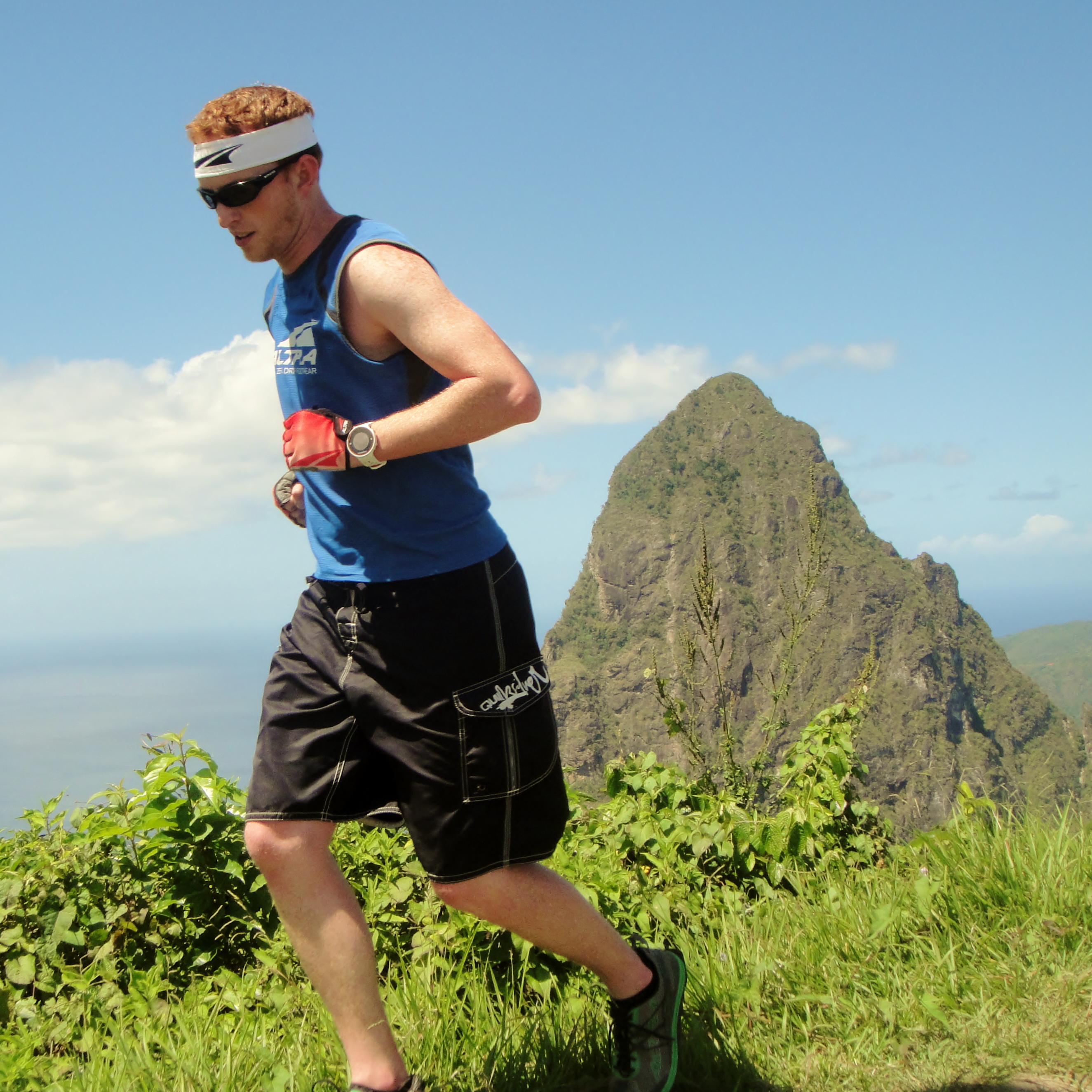
Running Tet Paul Trail in St. Lucia with one of the Pitons in the background

Running Tet Paul Trail in St. Lucia with one of the Pitons in the background