The first cushioned Zero Drop foot-shaped running shoes began as a way to fix customers injuries at my running store in the Wasatch Mountains.
Efficient, low impact running technique has always been a big deal in my family and at our running specialty store.
As a 240 pound defensive end, my father blew out all the cartilage in his knee playing college football and was told he would never walk normal and would never run again. What the doctor didn’t know is that telling him that he wouldn’t be able to run was all but assuring that my dad would make it his mission to be able to do so. One day, he received a postcard from a friend in the mail for the Las Vegas Marathon which simply said “If you’re a real man, you’ll do this.” Thinking to himself “I’m a real man”, he set his sights on the race.
He was unable to run at first and still can’t walk “normal” to this day, but eventually trained himself to be able to run by running the way elite Kenyan runners do—landing under a bent knee, which allowed the muscles of the leg to absorb the impact instead of his knee. It was painfully obvious that if he landed with a typical American harsh heel strike, he would be sidelined with pain in his bone-on-bone knee. A few years after his first marathon, he went on to win the St. George Marathon in 2:22:01. We still have his shoes from that race, complete with holes drilled in the midsole and the rubber ripped off the heel. Getting the cushion and weight out of the heel of the shoe is what allowed my dad to be able to maintain his proper technique, which kept him from having unbearable knee pain.
As a result, I was taught to run “like a Kenyan” from an early age. Legend has it that I ran before I walked and proper running technique was always a focus of my training. In the early 90’s, after having worked for Nike and Saucony, my dad opened a running specialty store—proper, low impact running technique quickly became a focus in how we helped customers to achieve their goals and avoid injury.
Additionally, my dad somehow discovered how to help solve problems for customers that came in the store with a foot condition. He started fitting their shoes a size to size and a half too large and left the laces at the bottom of the shoe super loose. Getting the feet to spread out and totally relax was extremely effective for bunions, neuromas, plantar fasciosis, metatarsalgia, and other common foot pain. I shortly came up with a method of lacing the shoes to skip the bottom laces entirely and get the foot to relax. This was the beginnings of our understanding that shoes need to actually be shaped like feet—not torpedoes—to be able to allow the feet to work naturally and avoid injury.
A theory on why injury rates haven’t gone down
In the mid to late 2000’s, I was managing the store post college. I had done my collegiate research on running technique and running injuries and one thing just wouldn’t leave my head—despite all the running shoe technologies, injury rates hadn’t gone down since the invention of the modern running shoe. In fact, some, like Achilles injuries, had actually gone up. I wanted to know why.
As a result, we started filming our customers with slow motion video and recognized an interesting phenomenon. As we watched them run, their technique looked great when they were barefoot or when they wore spikes or 5k racing flats. However, as we watched these same people run in the traditional best selling running shoes that we were selling them, their form deteriorated drastically—they tended to land harshly on their heels out in front of their bodies with a straighter knee.
I still remember my father saying something along the lines of “I don’t know if we’re really helping people here. I teach everyone a lesson on how to run to protect their bodies, and then we sell them a pair of shoes that basically encourages them everyday to do just the opposite.” At this point I started analyzing the slow motion video closely and I noticed two things when people wore traditional running shoes:
- As their foot would swing out in front of their body, their foot would dorsiflex (toes up) and their heel would point more toward the ground. When people weren’t wearing shoes, their feet would stay more parallel with the ground.
- As their foot would come down to land, it would catch the ground a few inches earlier than it would without a shoe on—this also meant that the knee was less bent and therefore in less of a position to bend and let the 3 foot spring of the leg absorb impact.
One day as I was looking at the video and playing around with different shoes, I had a theory. I thought that:
- Perhaps the heel dropped towards the ground because the shoes were not weight balanced due to the heel of the shoe being a lot heavier. Afterall, most of the “technology” like Gel, Air, etc. is in the heel. Additionally most shoes have heavy heel counters as well.
- Maybe the foot caught the ground early because the midsole in the heel was much thicker than in the forefoot—which didn’t allow the foot to swing under the body like it was supposed to. (Around this time, we learned that virtually 99% of all running shoes were twice as thick in the heel as they were in the forefoot—the standard shoe at the time was a 24mm heel and 12mm forefoot.)
The Trusty Toaster Oven
Shortly thereafter, I thought I would test this theory. I took a pair of shoes home and threw them in my trusty mini oven. Since my father regularly modifying shoes, I asked him to remind me how hot to set the toaster oven to in order to be able to take the rubber outsole and foam midsole off the shoe. I believe the response was “275…just wait until the glue starts to bubble.” Truth be told I left them in a bit long and melted the laces and some of the TPU on the upper. They were ugly, but I was able to take off the outsole and midsole and glue in some flat Spenco foam, and then re-glue the rubber outsole back on. I had created a shoe that had the same amount of cushioning & thickness in the forefoot as it had in the heel.
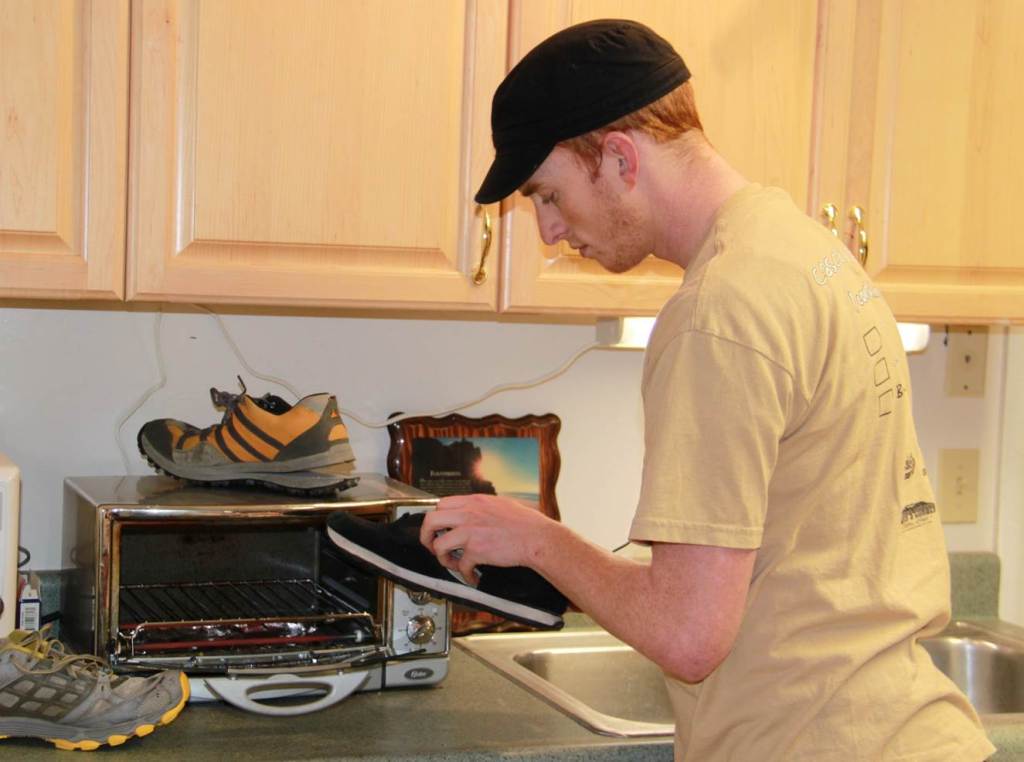
I used this toaster oven to create the first cushioned Zero Drop running shoe prototypes
I went for a run and for the first time in my life, I was wearing a cushioned, supportive shoe that wasn’t fighting my form…it felt like barefoot on the grass…or spikes on the track! I took them to the store and watched people on slow motion video…it seemed to work! People ran with better, lower impact, efficient technique…similar to barefoot or in spikes or flats. I then enlisted Robert at Village Shoemaker, to start modifying a set of shoes for the staff of the store to test. As I explained the idea to him of having shoes that left your feet in their natural position without raising the heel, he looked at me skeptically, pausing, and said “As a second generation Shoemaker and Pedorthist…that sure makes a lot of sense.”
Origins of the term ‘Zero Drop’
After Robert was sanding down a pair of shoes, he began to measure it and said “it looks like it is still dropping 2millimeters from the heel to the forefoot”, as I was always talking about making the shoes so they didn’t “drop” from heel to forefoot. He sanded a bit more and said “It looks like it’s dropping zero millimeters now”. I thought, “Robert, that’s it, we don’t have to call them the modified-hacked up shoes anymore, we’ll call them Zero Drop shoes!” The irony of course is that brands like New Balance & Merrell later started using our Zero Drop term to describe their non-cushioned, barefoot-like shoes…Zero Drop is a term to describe the cushioning of the shoe!
Long story short is that all but one of our staff members liked the original Jazz shoes we had modified, which we dubbed the “Jazzy Zero’s”. The staff felt the shoes making it easier for them to run better, and wanted to help others. Eventually, we started modifying many of the best selling shoes in the store to Zero Drop. We started off by testing them on our “hopeless customers”—those who had tried the most cushioned shoe, the most supportive shoe, orthotics, PT, etc., but still had the same injury problems. We told them we had been testing these hacked up, modified shoes and that they appeared to make people run with lower impact technique, which might help their injury. Of course, we told them, we didn’t know, and they might make it worse!
Data on the Effects of Zero Drop Shoes
Many customers got a pair of shoes modified and we asked them to take a survey with them on the shoes and return it in six weeks to let us know if this was something worth pursuing to help our customers. The full page survey asked a lot of questions regarding what injuries got better or worse, what muscles got used more or less, and for how long etc. The crazy thing that happened, is that before the surveys came back, people’s friend’s started coming in. They said things like “You gave Joe a pair of these hacked up shoes that he claims make him run better and now his knee doesn’t hurt as bad. Can I try a pair?” In disbelief we thought, “so you want to try an ugly pair of hacked up shoes too?”
In a matter of a year, we had nearly 1,000 customers get modified, Zero Drop shoes! We also got a LOT of surveys back. The data indicated that the shoes improved running technique and were most effective for shin splints, IT Band, Runner’s Knee, & lower back pain. The survey data also let us know that with a traditionally cushioned shoe, most people had about three weeks of lower calf tightness. We also discovered around the same time period that most people took around a year to adjust to wearing a non-cushioned shoe, and that when people wore a heavily cushioned Zero Drop shoe, there was very little adjustment period.
With the data in hand, I began to write articles and show some of my favorite shoe companies what was going on. I explained how all they had to do was simply balance the cushioning from heel to forefoot and get the toes to totally spread out and relax and all these injuries get better because people’s bodies are working naturally. I was blown away when the requests fell on deaf ears and we were even ridiculed by some shoe companies. As a huge fan of running shoes and these companies, I was a bit crushed when they told me they didn’t care about fixing injuries if it didn’t fit their marketing, design, or history. I had always just assumed that actually making the best product possible for the runner was first and foremost.
On my birthday—after failing to get any running shoe companies interested in building shoes that we believed were the best solution to helping our ailing customers—my cousin Jeremy Howlett was at my house and I told him what was going on. He hadn’t run in five years due to knee problems. I ended up giving him a pair of modified Zero Drop shoes, gave him a bit of a technique lesson, and he began to run successfully without pain again. He asked for a “real pair” and I told him they didn’t exist. He said: “Of course running shoes with the same amount of cushioning from heel to forefoot exist!” When he finally figured out they didn’t, he said “Well, we should just make them then!”
Of course, due to the rejection, I had been thinking of this for many months now, but regular people don’t just go start shoe companies. There are dozens of them…and starting a new one was not something I wanted to do. However, deep down inside, I knew we had to do it. Soon thereafter, a friend hooked us up to pitch the idea to Joe Morton, the founder of Xango. I will forever be grateful for the large investment and incredible amount of mentoring Joe gave us, despite not even having a drawing of a shoe!
Jeremy eventually found a guy in the footwear industry that had connections and we set up a meeting with him. He liked the idea and knew the right guys who had formed a company called Proof of Concept—one had been the VP of Development at Adidas, one of the others had been in charge of Nike’s Advanced Concepts team & was the lead instructor at Nike U for years. When they first called, I thought we were getting sued for modifying shoes!
However, they stated that they had been wanting to do something very similar for a long time now. In fact, through internal research, some of them had known for about 15 years that shoes should be made with level cushioning and be shaped like feet. They explained that they knew how to build shoes and had the connections to factories, but that they didn’t have a marketing story and that we did. Two weeks later we took a road trip up to Vancouver, Washington to meet. We discussed how the shoes needed to be built, as well as business plans.
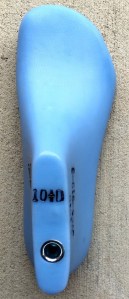
Foot-shaped Last
Soon we were designing foot-shaped Lasts and then shoe prototypes. The Last is the form the shoe is built around. We came up with the shapes for the Lasts by tracing feet in socks—but only the feet of people that didn’t have foot problems. We took a composite of the tracings and made the Lasts to be shaped exactly like the healthy sock-wearing feet.
As the months went on, we got real prototype shoes and they were awesome! Along the way, my buddy Jacob left. My good friend from high school and accomplished Ultramarathoner, Brian Beckstead, joined the quickly growing operation. After thousands of hours and hundreds of name ideas, we settled on the name Altra, a derivative of Altera, which meant to mend or fix that which is broken. Pretty soon, we were pitching our new shoe company at the Outdoor Retailer show and The Running Event—and people liked it. Others hated that we were challenging tradition. Next thing I knew, we were a half million to a million dollars in debt and here we are today! 😉

The first ever Instinct Prototype
Together, we have worked tirelessly to bring the most natural footwear possible to the masses. We believe our footwear will reduce injuries, make a difference, as well as make running more fun than ever.
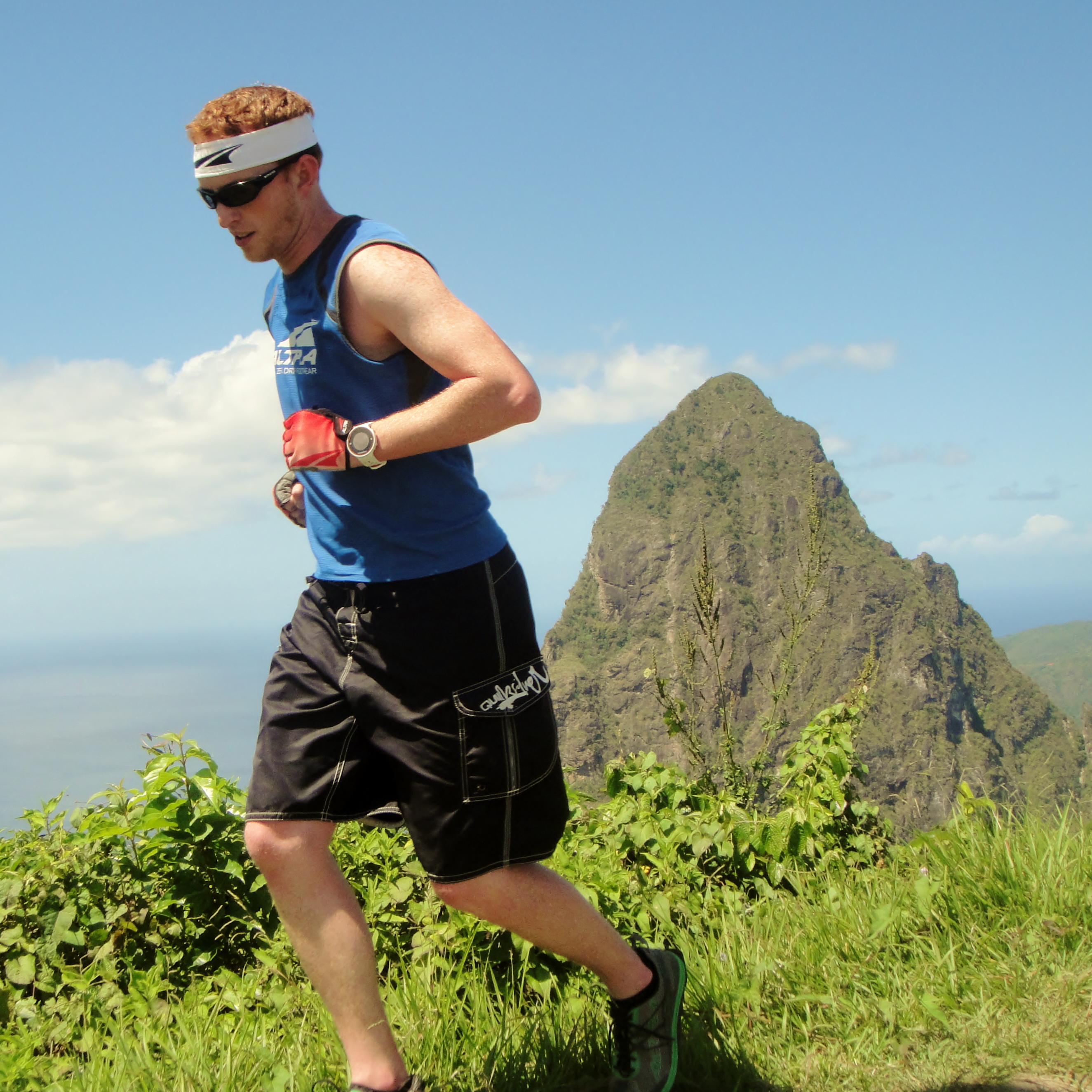
-Golden Harper
Golden graduated with a degree in Exercise Science and did his collegiate studies on running technique & running injuries. He grew up working in his family’s running store, was an All-American Cross-Country runner, and holds a world-best for a 12-year old in the marathon at 2:45:34.




 Correct Toes


 Golden